What is Daiginjo?
Daiginjo (大吟醸) is a ginjo-brewed sake from rice polished to 50% or less, with a little brewer's alcohol added (at most 10% of the rice's weight). Usually very aromatic and light. The 774 Daiginjo bottles with a price on KIKI have a median of ¥3,630 per 720 ml (as of 16 Nov 2026).
- Rule
- Polished to 50% or less
- Made from
- Rice, koji, water + brewer’s alcohol
- On KIKI
- 774 bottles
- Median per 720 ml
- ¥3,630
Why add brewer's alcohol?
The National Tax Agency says a measured amount added to the mash lifts the aroma and gives a "clean" taste. It also stops hiochi bacteria, which spoil sake's aroma and flavour. The compounds behind the ginjo aroma dissolve well in alcohol, so adding it before pressing is said to carry more of the aroma into the sake instead of leaving it in the lees.
The cap is 10% of the white rice's weight, counted as 95% alcohol. Brewer's alcohol is distilled from fermented starch or sugar, mostly sugarcane molasses.
Is it a lower grade than junmai daiginjo?
No. Under the national rules both need rice polished to 50% or less, ginjo brewing and a "particularly good" aroma, flavour and colour. The only difference is the added alcohol. Junmai or not is a choice of method, and the rules rank neither above the other.
It also takes more than milling. Ginjo brewing, a slow, cold fermentation that leaves more lees, means each tank yields less sake.
How does it compare with junmai daiginjo in the glass?
In KIKI's data (October 2026) daiginjo is clearly drier. The median sake meter value of 666 daiginjo is +3, against +1 for 1,323 junmai daiginjo. Only 5% of daiginjo sit below zero on the meter, the sweet side, against 31% of junmai daiginjo.
Daiginjo is also polished further. The median ratio is 40% against 45%, and 73% of daiginjo go to 40% or lower, against 47%. Side by side, daiginjo tends to lead with aroma and finish short, while junmai daiginjo leaves more rice sweetness and weight. To compare, pour two bottles from one brewery at the same temperature in the same glass, then judge aroma, first sip and finish in that order.
Which rice is used?
Of the 903 daiginjo in KIKI with a known rice, 76% use Yamada Nishiki, far above the 48% for junmai daiginjo. Yamada Nishiki was bred in Hyogo. Its large grains have a large starchy white core, which is said to let them be milled hard without breaking. Among KIKI's daiginjo, 36% are polished to 40% and 26% to 35%.
How should you store and serve it?
Upright in the fridge, away from light. Aroma is the point of this sake, and months at room temperature take that first. Once open, finish it within a month. The aroma calms day by day, though some bottles grow softer.
Serve it around 10°C in a small wine glass. One in three daiginjo in KIKI is 17% alcohol or more, and 8% come with on-the-rocks advice from the brewery or shop. For those, one large ice cube softens the strength and keeps the aroma. With food, try scallop or sweet shrimp sashimi, kelp-cured white fish, or grilled dishes eaten with salt.
Sources: 国税庁「清酒の製法品質表示基準」の概要, 国税庁「清酒の製法品質表示基準を定める件」
Which Daiginjo do shops stock most?
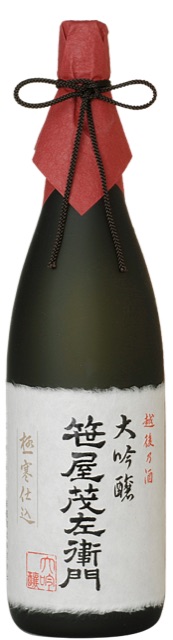
The Daiginjo bottles sold by the most shops.



How much does Daiginjo cost?
Most Daiginjo costs ¥3,000–5,000 per 720 ml (288 bottles), and the median is ¥3,630.
- under ¥1,00014
- ¥1,000–2,00092
- ¥2,000–3,000174
- ¥3,000–5,000288
- ¥5,000–10,000168
- ¥10,000 and up38
What does Daiginjo taste like?
Across 531 bottles with taste data it averages off-dry and medium-bodied, and the words used most are “floral”, “dry”, “fruity”, “mellow”, “clean” and “crisp finish”.
- Dry ↔ sweet
- off-dry
- Light ↔ rich
- medium-bodied
Where is it made?
Where the Daiginjo bottles on this site come from (bottles per prefecture):
Fukuoka 4Yamaguchi 4Toyama 4Aichi 3Saitama 2Saga 2Kyoto 2Hokkaido 2Okayama 2Tokushima 2Tochigi 2Kochi 2Gunma 1Wakayama 1Gifu 1Aomori 1Tokyo 1Ibaraki 1Shimane 1Kagawa 1Ehime 1
Daiginjo bottles
About Rakuten prices
Rakuten Ichiba prices were checked on each shop's page on or after 14 Nov 2026.
The information on this site is run by the creator of KIKI (kiki-sake.com). Prices and availability may change. The price shown at the Rakuten Ichiba shop (www.rakuten.co.jp) at the time of purchase applies to the sale.
Learn more
- Types of sake
- Popular sake ranking
- Ginjo vs daiginjo: what's the difference?
- What is the difference between junmai daiginjo and daiginjo?
- Glossary
- Price dataMedian price per 720 ml by grade, base ingredient and prefecture
Other types
Junmai DaiginjoJunmai GinjoGinjoTokubetsu JunmaiJunmaiTokubetsu HonjozoHonjozoFutsushu