What is Junmai Daiginjo?
Junmai Daiginjo (純米大吟醸) is the top junmai grade: a sake of rice, koji and water only, polished to 50% or less and brewed the ginjo way. Usually fragrant, delicate and served chilled. The 1,660 Junmai Daiginjo bottles with a price on KIKI have a median of ¥3,300 per 720 ml (as of 16 Nov 2026).
- Rule
- Polished to 50% or less
- Made from
- Rice, koji and water only
- On KIKI
- 1,660 bottles
- Median per 720 ml
- ¥3,300
How far is junmai daiginjo polished?
Most often to exactly 50%. Of the 2,174 junmai daiginjo in KIKI with a known polishing ratio (October 2026), 37% sit at 50% and 47% go to 40% or lower. The median is 45%, and 243 bottles are polished to 35%.
At 50%, making a given weight of white rice takes twice the brown rice. At 35% it takes about 2.9 times. The national rules ask for more than the ratio. The sake must be brewed the ginjo way, have a "particularly good" aroma, flavour and colour, use at least 15% koji rice, and use rice graded third class or better. Ratios are judged with fractions below 1% cut off, so rice milled to 50.6% still counts as "50% or less".
Does more polishing make better sake?
No. The National Tax Agency explains that too much of the protein and fat in the outer grain spoils aroma and taste. Polishing them away tends to give a lighter, more fragrant sake, with less of the rice's own flavour.
In KIKI's taste data, read mostly from brewery and shop descriptions, junmai daiginjo at 40% or less and at 50% score almost the same for aroma and for umami. Rice variety, yeast and pressing matter more than the figure. Read the ratio as a measure of how much rice and work went in.
What temperature and glass?
Aim for 10 to 15°C, about ten minutes out of the fridge. Near 5°C the aroma is said to close up. A wine glass with a narrowing rim shows the aroma far better than a small cup, and shows it opening up as the sake warms.
Of the 1,159 junmai daiginjo in KIKI with serving advice, 95% suggest chilled and 12% suggest nurukan, gently warm. Some gain rice sweetness at about 40°C, so try the last glass warm.
What food goes with it?
Pick light dishes that leave the aroma alone, such as white fish sashimi or carpaccio, tempura with salt and sudachi, steamed chicken, fresh cheese such as mozzarella, pears and peaches. Garlic, strong spice and sweet soy glazes hide the aroma. It also works as the first glass of a meal, or after dinner on its own.
What should you read on the label?
The polishing ratio and the rice on the back label. A variety can be named when it is more than half the rice. Some breweries add the pressing method. Fukuro-tsuri means the mash hung in cloth bags, keeping only the drops that fall without pressure. Of KIKI's junmai daiginjo with a known rice, 48% use Yamada Nishiki. Gohyakumangoku and Omachi come next, at 5 to 6% each.
Front-label words help too. 14% are genshu, undiluted and about 17 to 20% alcohol. 10% are namazake, which must stay in the fridge. The aroma fades with time, so pick a recent bottling date where one is printed, refrigerate after opening and finish it soon.
Sources: 国税庁「清酒の製法品質表示基準」の概要, 国税庁「清酒の製法品質表示基準を定める件」
Which Junmai Daiginjo do shops stock most?
The Junmai Daiginjo bottles sold by the most shops.
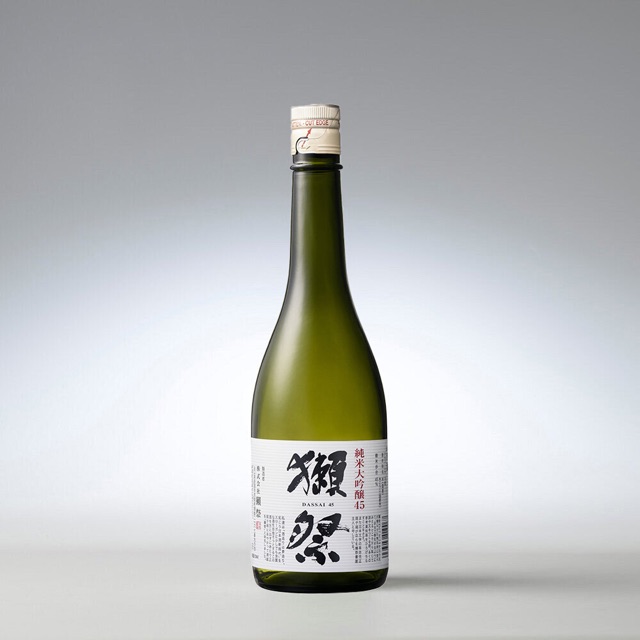 Dassai 45 Junmai DaiginjoJunmai Daiginjo¥2,474 720 ml
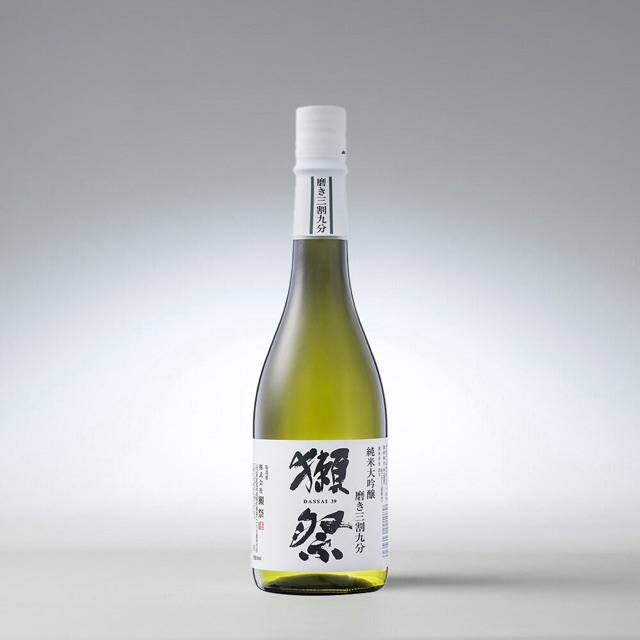 Dassai 39 Junmai DaiginjoJunmai Daiginjo¥3,080 720 mlKubota Manjyu Junmai DaiginjoJunmai Daiginjo¥4,580 720 ml
 Dassai 23 Junmai DaiginjoJunmai Daiginjo¥6,380 720 ml

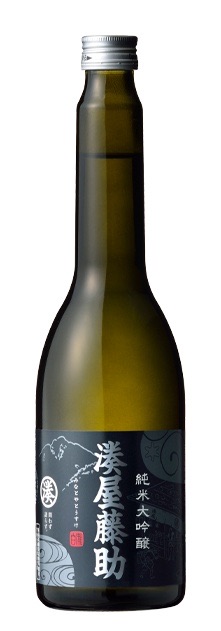 Minatoya Tosuke Junmai DaiginjoJunmai Daiginjo¥506 180 ml
How much does Junmai Daiginjo cost?
Most Junmai Daiginjo costs ¥3,000–5,000 per 720 ml (481 bottles), and the median is ¥3,300.
- under ¥1,0006
- ¥1,000–2,000321
- ¥2,000–3,000409
- ¥3,000–5,000481
- ¥5,000–10,000289
- ¥10,000 and up154
What does Junmai Daiginjo taste like?
Across 1,206 bottles with taste data it averages balanced and medium-bodied, and the words used most are “floral”, “fruity”, “mellow”, “rice umami”, “dry” and “crisp finish”.
- Dry ↔ sweet
- balanced
- Light ↔ rich
- medium-bodied
Where is it made?
Where the Junmai Daiginjo bottles on this site come from (bottles per prefecture):
- Niigata78
- Yamagata44
- Nagano35
- Yamaguchi26
- Kochi23
- Hyogo21
- Ishikawa16
- Akita16
- Miyagi15
- Fukushima14
- Aichi13
- Okayama13
Mie 12Hiroshima 10Tochigi 10Kyoto 9Yamanashi 9Toyama 8Aomori 7Ehime 7Tokushima 6Gifu 5Iwate 5Shizuoka 5Ibaraki 4Gunma 4Fukuoka 3Wakayama 2Saitama 2Saga 2Nara 2Chiba 2Hokkaido 2Kanagawa 2Fukui 1Tokyo 1
Junmai Daiginjo bottles
About Rakuten prices
Rakuten Ichiba prices were checked on each shop's page on or after 14 Nov 2026.
The information on this site is run by the creator of KIKI (kiki-sake.com). Prices and availability may change. The price shown at the Rakuten Ichiba shop (www.rakuten.co.jp) at the time of purchase applies to the sale.
Learn more
- Types of sake
- Popular sake ranking
- What is the difference between junmai daiginjo and daiginjo?
- Junmai ginjo vs junmai daiginjo: what's the difference?
- Glossary
- Price dataMedian price per 720 ml by grade, base ingredient and prefecture
Other types
DaiginjoJunmai GinjoGinjoTokubetsu JunmaiJunmaiTokubetsu HonjozoHonjozoFutsushu