

What is Futsushu?
Futsushu (普通酒) is a sake that meets none of the eight premium grades, such as junmai, ginjo or honjozo. Labels rarely say so. No grade on the label means futsushu. Mostly everyday sake. The 539 Futsushu bottles with a price on KIKI have a median of ¥832 per 720 ml (as of 16 Nov 2026).
- Rule
- No polishing rule
- Made from
- Rice, koji, water + brewer’s alcohol
- On KIKI
- 539 bottles
- Median per 720 ml
- ¥832
How much futsushu is drunk?
More than six in ten litres of sake shipped in Japan. National Tax Agency figures for the 2023 brewing year show 387,913 kL of sake shipped, of which 145,970 kL, or 37.6%, carried a premium grade. The other 240,000 kL or so was futsushu. In the 1988 brewing year futsushu was 1.254 million of 1.448 million kL, close to nine in ten.
KIKI lists 763 futsushu, about 6% of its sake with a known type (October 2026). The online shops KIKI draws on show a very different picture from what is actually drunk.
What goes into futsushu?
Rice, koji and water, plus what the law allows. The Liquor Tax Act and its order list alcohol, shochu, sugars such as glucose, organic acids, amino acid salts and sake as permitted ingredients, up to a combined 50% of the weight of the rice, koji rice included.
Every one of them must appear in the ingredients list. Some futsushu use only rice, koji and brewer's alcohol, others list sugars and acidulants as well, so the back label tells you which kind you have.
Why doesn't it carry a grade?
Because it misses at least one premium rule. Brewer's alcohol above 10% of the rice weight, added sugars or acids, less than 15% koji rice, or rice not graded third class or better (or the equivalent) each rule a grade out.
It is not always lightly polished. Of the 411 futsushu in KIKI with a known ratio, 14% are at 60% or less, as far as ginjo. The most common figure is 70%, half of them.
Is futsushu bad sake?
Having no grade does not make it poor sake. Many breweries make futsushu as the sake local drinkers have every day, made to hold up warm or cool. 19% of KIKI's futsushu are 14% alcohol or less, so light bottles are common too.
Is "hiya" served cold?
No. Hiya means room temperature, about 20°C. Sake from the fridge is reishu. Futsushu is mostly drunk at room temperature or warm. Of the 393 futsushu in KIKI with serving advice, 59% name nurukan, 54% room temperature and 48% atsukan, the highest atsukan share of any sake type in KIKI.
Warm it to 40 to 50°C and serve it with oden, motsu-ni, grilled fish or yudofu. A quarter are sold only in the 1.8-litre isshobin, and 12% come in 2-litre cartons or larger, the way an everyday sake is bought.
How can you tell it from the label?
No grade printed means futsushu. The label rarely says "futsushu". Words like josen or kasen are a brewery's own ranks within its range, not national grades. When a label uses a phrase close to a grade, such as "rice-only sake", a clear note nearby must say it is not a premium grade.
Sources: 国税庁「酒のしおり」付表 特定名称酒のタイプ別課税移出数量の推移, e-Gov法令検索「酒税法」第3条, e-Gov法令検索「酒税法施行令」第2条, 国税庁「清酒の製法品質表示基準」の概要
Which Futsushu do shops stock most?
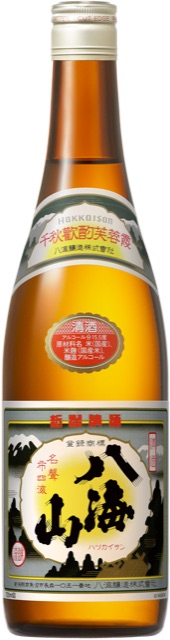
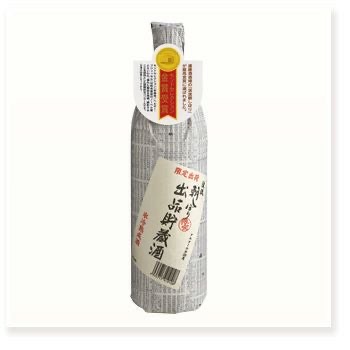
The Futsushu bottles sold by the most shops.


How much does Futsushu cost?
Most Futsushu costs under ¥1,000 per 720 ml (403 bottles), and the median is ¥832.
- under ¥1,000403
- ¥1,000–2,000122
- ¥2,000–3,0008
- ¥3,000–5,0003
- ¥5,000–10,0003
- ¥10,000 and up0
What does Futsushu taste like?
Across 452 bottles with taste data it averages off-dry and medium-bodied, and the words used most are “dry”, “clean”, “light”, “crisp finish”, “depth” and “mellow”.
- Dry ↔ sweet
- off-dry
- Light ↔ rich
- medium-bodied
Where is it made?
Where the Futsushu bottles on this site come from (bottles per prefecture):
Hiroshima 3Shizuoka 2Hokkaido 2Yamaguchi 2Aichi 1Toyama 1Osaka 1Fukui 1Nagasaki 1Aomori 1Tokyo 1Saga 1Kochi 1
Futsushu bottles
About Rakuten prices
Rakuten Ichiba prices were checked on each shop's page on or after 14 Nov 2026.
The information on this site is run by the creator of KIKI (kiki-sake.com). Prices and availability may change. The price shown at the Rakuten Ichiba shop (www.rakuten.co.jp) at the time of purchase applies to the sale.
Learn more
- Types of sake
- Popular sake ranking
- Glossary
- Price dataMedian price per 720 ml by grade, base ingredient and prefecture
Other types
Junmai DaiginjoDaiginjoJunmai GinjoGinjoTokubetsu JunmaiJunmaiTokubetsu HonjozoHonjozo