

What is awamori?
Awamori (泡盛) is the distilled spirit of Okinawa, usually made from Thai rice and black koji in an all-koji mash and distilled in a pot still. Aged three years or more, it becomes kusu. The 364 awamori bottles with a price on KIKI have a median of ¥1,957 per 720 ml (as of 16 Nov 2026).
- Made from
- Thai rice, black koji (all koji)
- On KIKI
- 364 bottles
- Median per 720 ml
- ¥1,957
Why Thai rice and black koji?
Because of Okinawa's heat. The national standard for the "Ryukyu" geographical indication says the hot, humid islands spoil mash easily. Black koji makes more citric acid than other koji, so the sour mash ferments cleanly. Its scientific name, Aspergillus luchuensis, comes from Ryukyu, and it is one of Japan's designated "national moulds". Every awamori in KIKI uses black koji (October 2026).
Thai rice is hard and dry, and koji mould spreads through it easily. It became the main rice around the 1920s, helped by a steady price and quality. The Ryukyu standard sets only black-koji rice koji and Okinawan water, not where the rice grows, and KIKI lists a few awamori from Japanese rice.
What does an all-koji mash do to the taste?
All the rice becomes koji, and water and yeast go in at once, with nothing added later. The standard credits this with a full flavour from a light oiliness in the koji. Atmospheric distillation smells toasty and vacuum distillation of apple or banana, it adds. Of 33 awamori in KIKI with a known still, 85% are atmospheric, so look for 減圧 (vacuum) on the label for a lighter one.
Regular awamori or kusu?
Awamori stored in full for three years or more is kusu, and younger awamori is usually called ippanshu. Of the awamori in KIKI, 52% is kusu and most often three, five or ten years old.
Kusu is stronger, with a median of 40% in KIKI against 30% for regular awamori. For atmospheric kusu the standard names a sweet, vanilla-like aroma and one like matsutake mushrooms.
Of the kusu with serving advice, 70% recommend it neat, while 68% of regular bottles suggest water, which the Okinawa distillers' association presents as the way to drink awamori with food. Try goya champuru, rafute pork or tofuyo with it, and sip kusu from a small cup with water on the side.
Where does kusu mature?
In clay pots and bottles. Awamori does not borrow aroma from wood, the standard explains. Its own compounds change, so it keeps maturing after bottling. In KIKI, 90% of awamori with a known way of storage rested in tanks, 6% in pots and 4% in barrels.
At home there is shitsugi. You drink from the oldest pot, top it up from the next oldest, and so on down the line, so the old spirit never runs out. The parent pot suits atmospheric awamori at about 43%, with no more than a tenth taken out a year.
How is hanazake different from regular awamori?
One story behind the name awamori, the standard says, is that distillers poured fresh spirit from a height and judged its strength by the foam, awa. Very strong awamori, whose foam piles up like a flower, is also called hanazake.
On Yonaguni, Japan's westernmost island, hanazake is made at 60% from the strong first part of the run. Awamori, like all single-distilled shochu, may be at most 45%, so hanazake is classed as raw-material alcohol under the Liquor Tax Act. Over half of KIKI's awamori is 35% or stronger, and eight bottles pass 45%, hanazake and undiluted spirits at 46–51%.
Sources: 国税庁「地理的表示『琉球』生産基準」, 国税庁「酒類の地理的表示一覧」, 国土交通省 観光庁 多言語解説文データベース「泡盛の特徴 なぜタイ米を使用するのか?」, 沖縄県酒造組合「古酒の定義」, 沖縄県酒造組合「仕次ぎ」, 沖縄県酒造組合「食中酒として最適な水割り」
Which awamori do shops stock most?
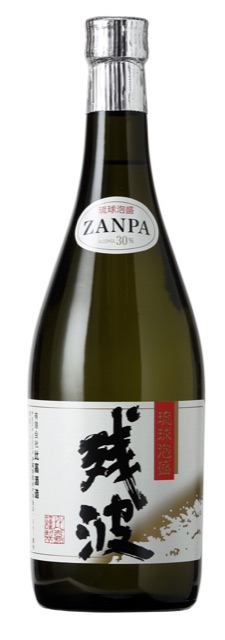
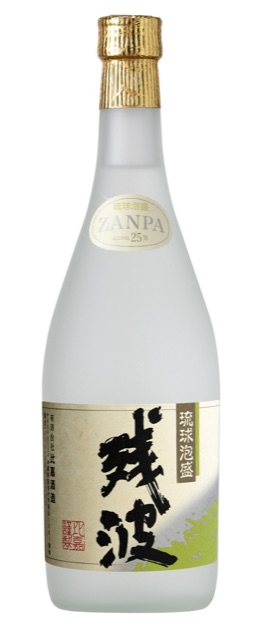
The awamori bottles sold by the most shops.


How much does awamori cost?
Most awamori costs ¥1,000–2,000 per 720 ml (125 bottles), and the median is ¥1,957.
- under ¥1,00059
- ¥1,000–2,000125
- ¥2,000–3,00054
- ¥3,000–5,00052
- ¥5,000–10,00036
- ¥10,000 and up38
What does awamori taste like?
Across 289 bottles with taste data it averages balanced and medium-bodied, and the words used most are “aged”, “mellow”, “depth”, “rich”, “sweet” and “clean”.
- Dry ↔ sweet
- balanced
- Light ↔ rich
- medium-bodied
Where is it made?
Where the awamori bottles on this site come from (bottles per prefecture):
- Okinawa116
Awamori bottles
About Rakuten prices
Rakuten Ichiba prices were checked on each shop's page on or after 14 Nov 2026.
The information on this site is run by the creator of KIKI (kiki-sake.com). Prices and availability may change. The price shown at the Rakuten Ichiba shop (www.rakuten.co.jp) at the time of purchase applies to the sale.
Learn more
- Awamori guideVs shochu, kusu, how to drink it, distilleries
- How does awamori differ from shochu?
- Popular awamori ranking
- Glossary
- Price dataMedian price per 720 ml by grade, base ingredient and prefecture