What is Tokubetsu Honjozo?
Tokubetsu Honjozo (特別本醸造) is a honjozo sake polished to 60% or less, or made by a special method, with a little brewer's alcohol added. Often a cleaner, more refined honjozo. The 141 Tokubetsu Honjozo bottles with a price on KIKI have a median of ¥1,144 per 720 ml (as of 16 Nov 2026).
- Rule
- No polishing rule
- Made from
- Rice, koji, water + brewer’s alcohol
- On KIKI
- 141 bottles
- Median per 720 ml
- ¥1,144
How often do you see tokubetsu honjozo?
Rarely. It is the smallest of the eight premium grades in KIKI, 220 of 11,624 premium-grade bottles, or 1.9% (October 2026). Of the 189 with a known ratio, 73% are polished to exactly 60%, and only eight are milled less than that. So for almost all of them, the polishing ratio is the likely special reason.
Under the national rules, tokubetsu honjozo is a honjozo with a "particularly good" aroma, flavour and colour, whose reason is explained on the label through objective facts such as ingredients or method. If polishing is the reason, the ratio must be 60% or less.
How does a 60% tokubetsu honjozo differ from ginjo?
The polishing and the added alcohol can be identical. The dividing line is ginjo brewing. Ginjo is fermented slowly and cold, with more lees left behind, to bring out a fruity aroma. Tokubetsu honjozo has no such rule, so most keep the aroma modest and rely on rice flavour and a clean finish.
That shows in how they are served. Of the 125 tokubetsu honjozo in KIKI with serving advice, 33% suggest atsukan, hot, about five times the 7% for ginjo. Ginjo is for the aroma, tokubetsu honjozo for warming and eating with.
How does it differ from plain honjozo?
Honjozo allows up to 70%, and 65% or 70% make up more than seven in ten of KIKI's honjozo. Tokubetsu honjozo is milled five to ten points further, which tends to give a cleaner, less rough sake.
The rice differs too. Of 144 tokubetsu honjozo with a known rice, Gohyakumangoku leads at 33%, ahead of Yamada Nishiki at 19%. 17% come from Niigata, a higher share than for honjozo.
Is tokubetsu honjozo mostly dry?
Mostly, yes. The median sake meter value of the 136 tokubetsu honjozo in KIKI with one is +4, above +3 for honjozo and junmai, and 65% are +3 or higher. Median acidity is a low 1.3, so even the dry ones feel smooth and light.
Alcohol is lighter than water, so sake with added alcohol tends to read higher on the meter. The figure is a guide only, and 11% sit below zero, on the sweet side.
Chilled or warm?
Both. It has one of the widest temperature ranges. Of the 125 bottles with advice, 82% name chilled, 54% nurukan, 45% room temperature and 33% atsukan. At about 15°C it drinks as a crisp dry sake, and at 45°C, jokan, rice sweetness and umami come forward.
Chilled, try tuna or squid sashimi and cold tofu. Warm, try yudofu, chicken skewers with salt, yosenabe or oden. 80% come in the 1.8-litre isshobin, the highest share of any grade in KIKI, so one bottle at home can move from cool in summer to warm in winter. Once open, finish it within about a month.
Sources: 国税庁「清酒の製法品質表示基準を定める件」, 国税庁「清酒の製法品質表示基準」の概要
Which Tokubetsu Honjozo do shops stock most?
The Tokubetsu Honjozo bottles sold by the most shops.
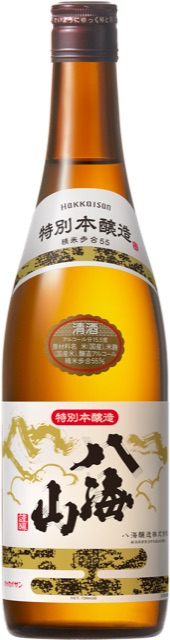 Hakkaisan Tokubetsu HonjozoTokubetsu Honjozo¥1,250 720 ml


How much does Tokubetsu Honjozo cost?
Most Tokubetsu Honjozo costs ¥1,000–2,000 per 720 ml (101 bottles), and the median is ¥1,144.
- under ¥1,00029
- ¥1,000–2,000101
- ¥2,000–3,0005
- ¥3,000–5,0004
- ¥5,000–10,0001
- ¥10,000 and up1
What does Tokubetsu Honjozo taste like?
Across 101 bottles with taste data it averages off-dry and medium-bodied, and the words used most are “dry”, “crisp finish”, “clean”, “light”, “mellow” and “fresh”.
- Dry ↔ sweet
- off-dry
- Light ↔ rich
- medium-bodied
Where is it made?
Where the Tokubetsu Honjozo bottles on this site come from (bottles per prefecture):
Tokubetsu Honjozo bottles
About Rakuten prices
Rakuten Ichiba prices were checked on each shop's page on or after 14 Nov 2026.
The information on this site is run by the creator of KIKI (kiki-sake.com). Prices and availability may change. The price shown at the Rakuten Ichiba shop (www.rakuten.co.jp) at the time of purchase applies to the sale.
Learn more
- Types of sake
- Popular sake ranking
- Glossary
- Price dataMedian price per 720 ml by grade, base ingredient and prefecture
Other types
Junmai DaiginjoDaiginjoJunmai GinjoGinjoTokubetsu JunmaiJunmaiHonjozoFutsushu