

Sugidama: what the cedar ball at a sake brewery means, and why it turns brown
A sugidama (sakabayashi) is a ball of cedar leaves hung at sake breweries, a custom traced to Omiwa Shrine in Nara. It dries from green to brown, so its colour shows roughly how long it has hung.
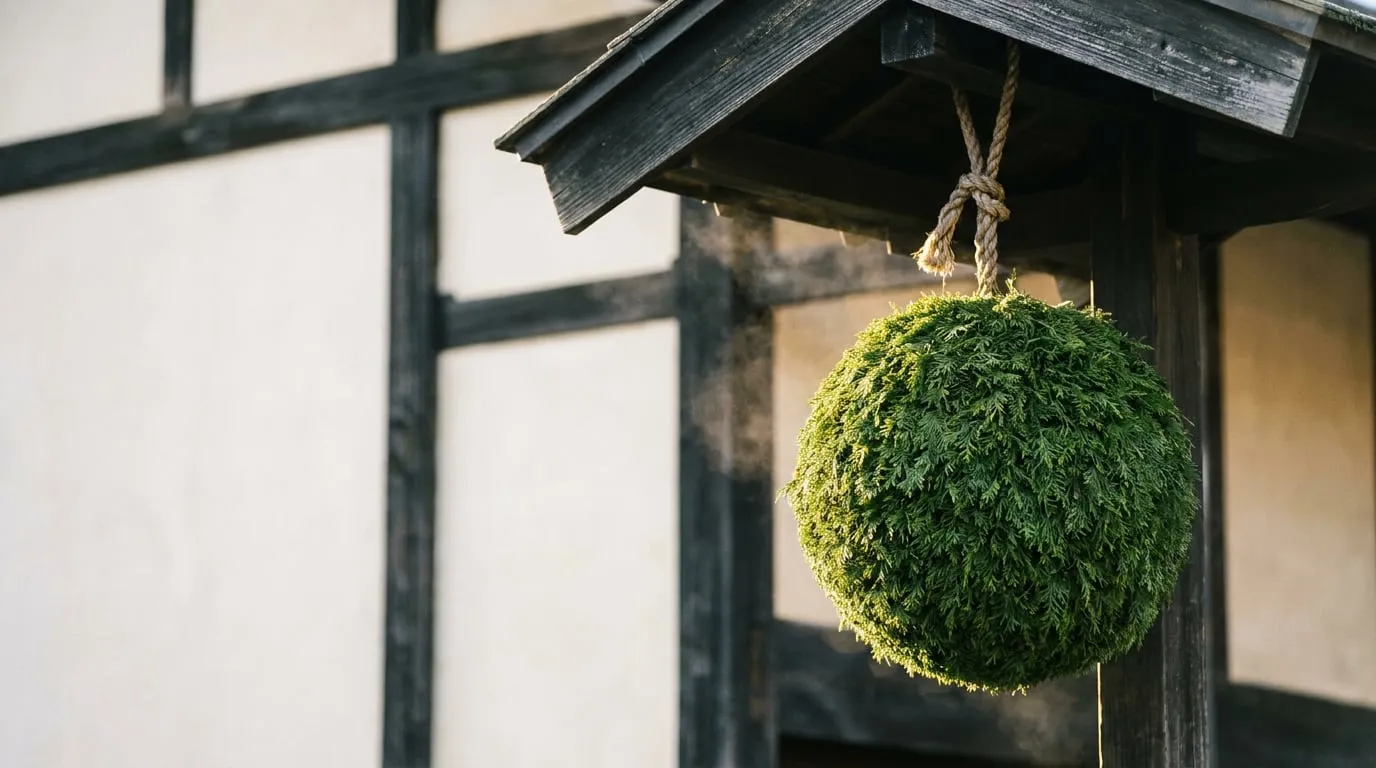
At the entrance of the Sake Museum in Nishinomiya, Hyogo, a large ball of cedar leaves hangs above the door. In 2022 the museum swapped it on 24 October, and its own column shows last year's ball, dried to brown, next to the fresh green one. Same shape, same place, a year apart.
In the right season, the same green ball hangs outside sake breweries all over Japan.
A ball of cedar leaves, the sakabayashi
A sugidama (杉玉, "cedar ball") is a sphere made of cedar leaf tips, hung under the eaves of a sake brewery or a sake shop. It is also called sakabayashi (酒林, "sake grove"). The custom is to hang a new one every year.
Why does it turn brown?
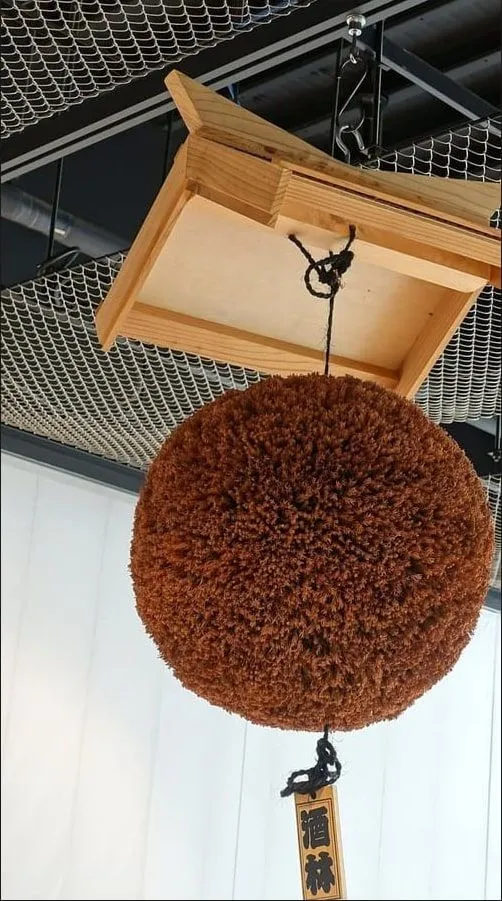
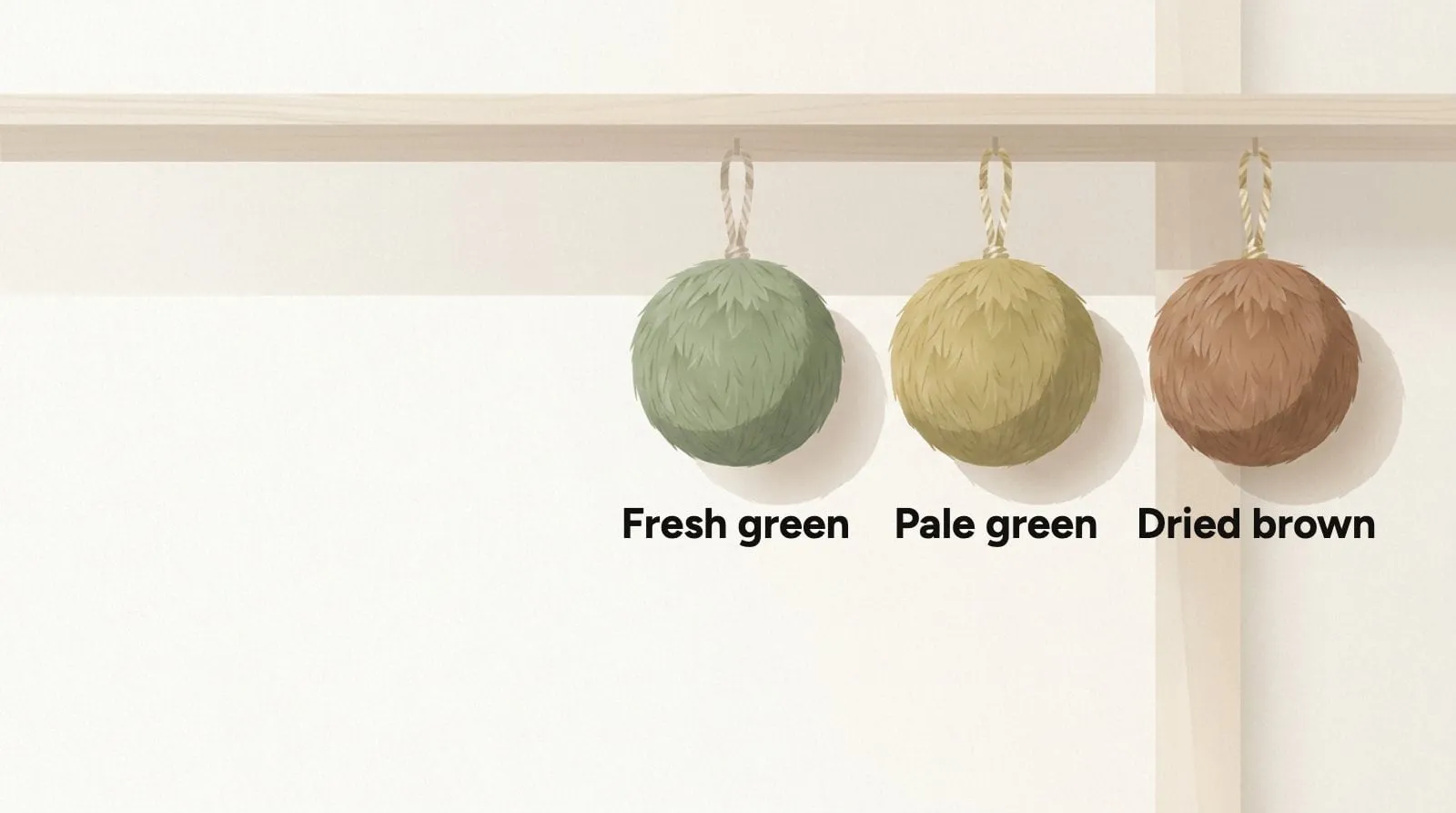
Because the cut cedar leaves dry out. The water in them evaporates over time, and the ball fades from bright green to a tea brown. A freshly hung ball is vivid, while an old one looks dusty and quiet. So the colour shows how long the ball has been hanging.
Reading the colour
A widely repeated reading links the colour to the sake season.
| Colour | Rough time | Season of sake it lines up with |
|---|---|---|
| Vivid green | February to June | New sake (shiboritate, freshly pressed) |
| Pale green | Early summer to summer | Summer sake |
| Dried brown | Autumn | Hiyaoroshi (sake rested through summer) |
This reading comes from the brewery Sawanotsuru.
Treat it as a rule of thumb, not a label. Breweries do not all change the ball at the same time, and the sources disagree:
- The Sake Museum swaps its ball on 24 October (2022).
- Omiwa Shrine hangs a new giant one on 13 November.
- Asahi Shuzo's guide says around October, when new sake is pressed.
- Sawanotsuru says the ball starts to go up in February or March.
- A sugidama maker, Takabayashi, gives late November.
Pressing starts earlier or later depending on the brewery and the region. The safe reading is that green means the ball was hung recently and brown that it has been hanging a while. It is not a promise about what is in the bottle.
First an offering, then a sign
Today it is read as a sign that new sake is ready. Some sources, Sansya's guide and Japanese Wikipedia, say it began as something else: an offering of thanks to the sake deity. "The sake is ready" came later. Both sources are brewery-side or encyclopedic, so read this as a plausible history, not a settled fact.
The roots: Mount Miwa and Omiwa Shrine
The most widely accepted origin is Omiwa Shrine (大神神社, Omiwa Jinja) in Sakurai, Nara Prefecture, at the foot of Mount Miwa, which is the shrine's sacred body. Its deities, Omononushi and Sukunahikona, have been worshipped as gods of sake brewing since ancient times. Inside the grounds there is even a small shrine to Takahashi no Ikuhi no Mikoto, described as the ancestor of the toji, the master brewer.
The Nihon Shoki, Japan's early chronicle, tells of Ikuhi brewing sake to be offered to the Miwa deity under Emperor Sujin. In old poetry, umasake ("fine sake") is a stock epithet for Miwa itself, and a poem in the Man'yoshu (Book 4, no. 712) mentions the sacred cedar that the Miwa priest tends. The cedars of Mount Miwa were sacred.
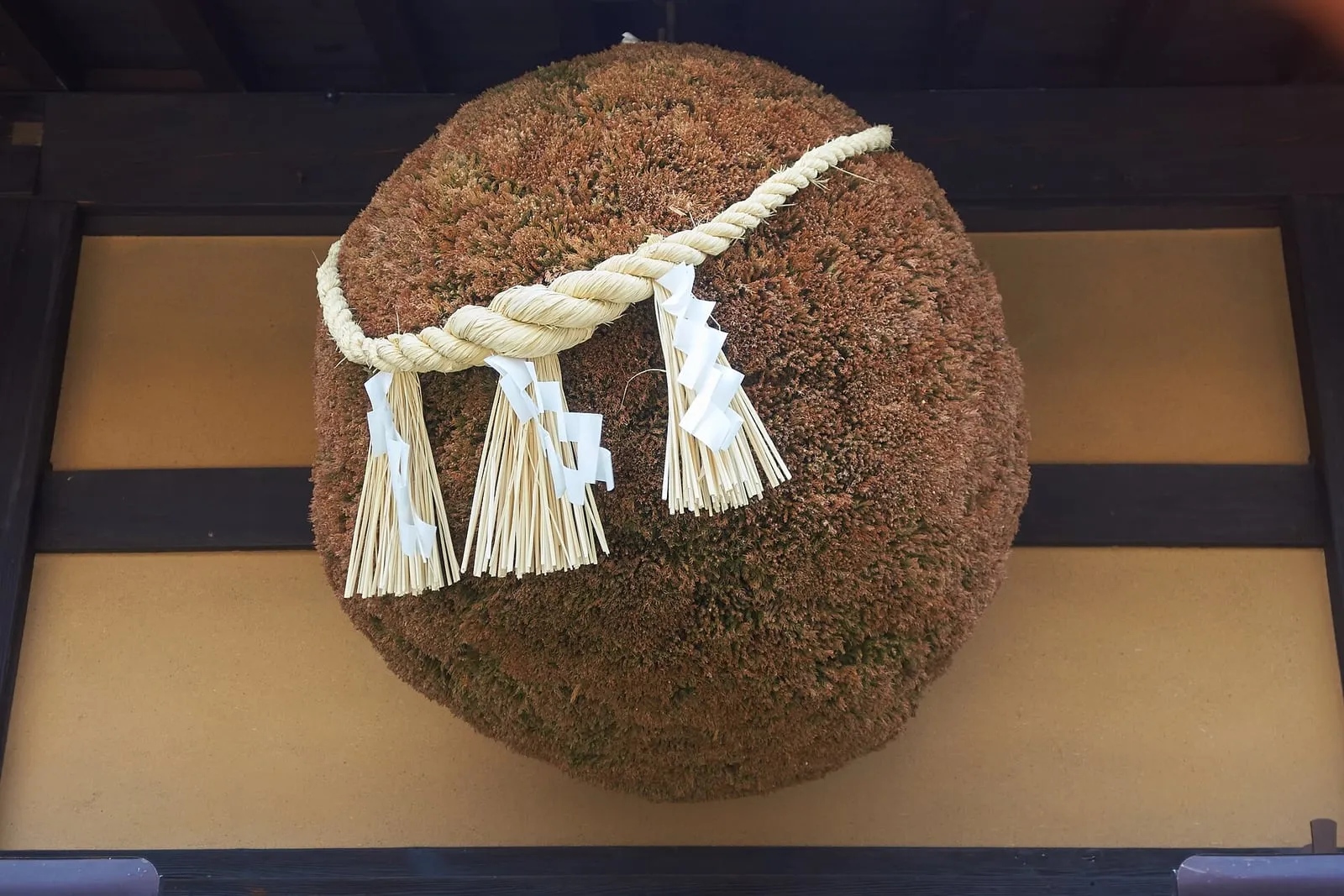
According to the shrine, from the medieval to the early modern period a custom arose of bundling cedar leaves in which the deity's power was thought to dwell, and hanging them under the eaves of sake makers. These bundles were called sakabōki ("sake broom") or sakabayashi, and they are considered the prototype of the sugidama. Some breweries still wrap their ball in a sacred straw rope (shimenawa) with white paper streamers, which makes sense given where the custom comes from. The wider story of Nara sake is in Nara.
Edo-period books: from bundle to ball
The Sake Museum column quotes three Edo-period sources.
- Wakan Sansai Zue (1712). The sakabayashi in its illustration is not a ball at all: a simple bundle tied in the middle. The text says it is the sign of a sake shop, made of bundled cedar leaves, and cedar is used because it suits sake, as many brewing tools were made of cedar.
- Nihon Sankai Meisan Zue. It retells the Nihon Shoki story and says that, because Omiwa Shrine treats cedar as sacred, the brewer's marker changed from a sakabata (sake flag) to cedar.
- Morisada Manko (late Edo). Cedar leaves, in various sizes, roughly one to two shaku across (about 30 to 60 cm), hung under the eaves of sake shops. By then it looks like a ball.
So the timeline is bundle first, ball later. In the 1712 drawing it is only a bundle, and the round form comes into clear view only in late Edo records. The sphere is a younger shape than it looks. When the custom spread nationwide is told differently: some sources say early Edo, others the middle.
The giant sugidama and the sake festival on 14 November
Every year on 14 November, Omiwa Shrine holds its jozo anzen kigansai, a festival for safe brewing, popularly the "sake festival" (sake matsuri). On the day before, from around 9 a.m., a new giant sugidama is hung at the worship halls. It is about 1.5 m across. The shrine's pages give its weight as 150 kg on one page and 200 kg on another. Its leaves come from Mount Miwa.
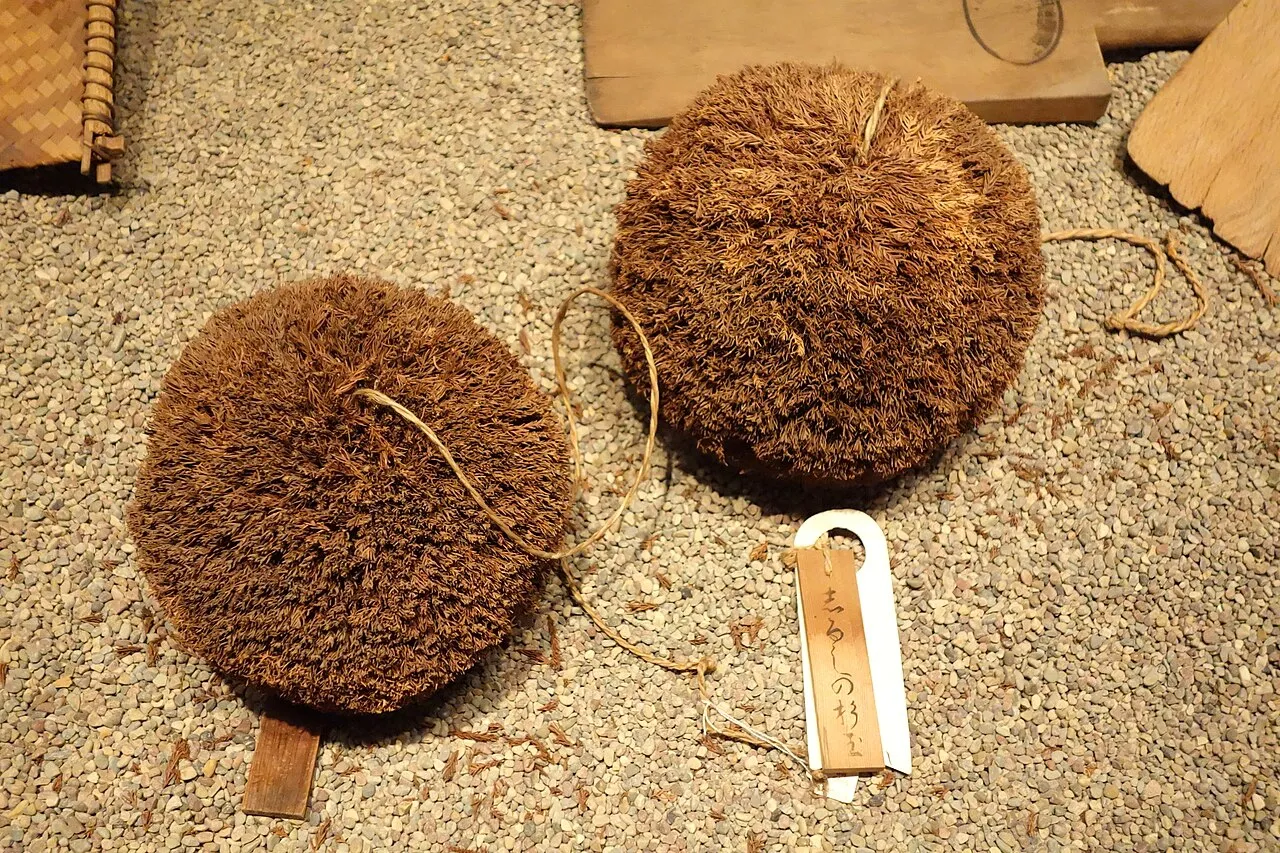
Brewers come from all over the country. The shrine has a faith group for the trade, the Sakae-ko, said to date from the Taisho era (1912 to 1926). From around the festival, the shrine gives its members a small "shirushi no sugidama", with a wooden tag reading 三輪明神 志るしの杉玉 ("Miwa Myojin, sign cedar ball"). Fukumitsuya, a brewery in Kanazawa, says its ball is about 50 cm across and hangs at its entrance for a year.
How is a sugidama made?
The method is plain.
- Make a wire frame about half the size of the finished ball.
- Push cedar leaf tips into it, starting from the bottom and working up.
- When the top is done, trim the ball into a neat sphere.
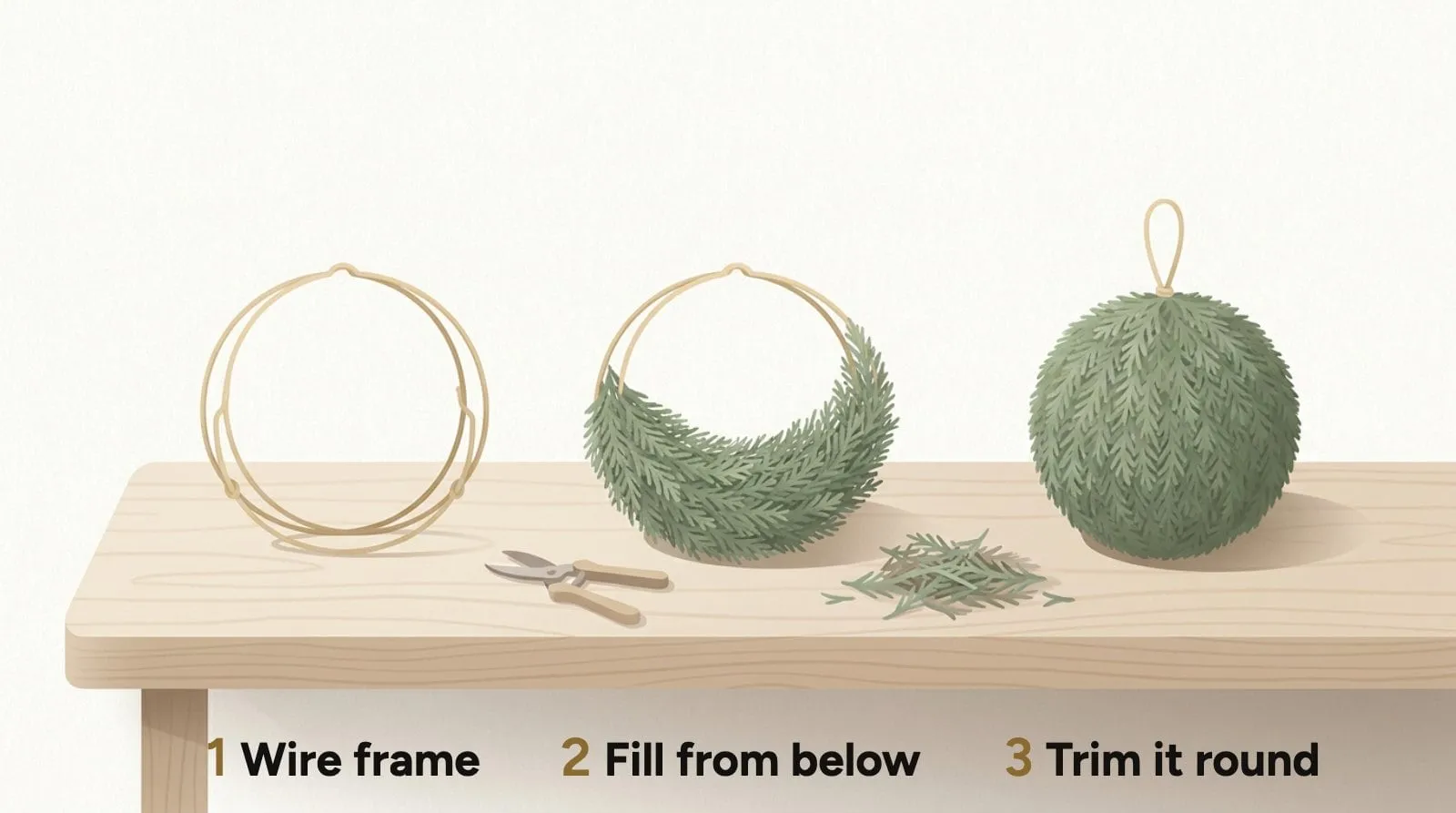
Asahi Shuzo's guide adds that the frame is made of thick wire rings, and that gloves help. A new ball weighs over 20 kg, it says, and after a year of drying about half that. Colour is not the only thing that changes.
Where can you see one?
The surest place is a sake brewery in the new-sake season. A few breweries in KIKI's catalogue have their own sugidama stories (data as of 5 November 2026):
- A brewery that celebrates the day it goes up: Tenryo Shuzo in Gero, Gifu, held a sugidama-raising event on 3 November 2026. Hanging the new ball is a date in the brewery's year.
- A sake actually called Sugidama: Momokawa in Oirase, Aomori, makes a brand named 杉玉 alongside its Momokawa sake. It also takes visitors: free, about 50 minutes, booked at least five days ahead, according to its website.
- Breweries that keep the old look: Umenishiki Yamakawa in Shikokuchuo, Ehime, and Watanabe Shuzo Honten in Kurashiki, Okayama, still hang a sugidama on their traditional buildings.
Our page of sake breweries you can visit lists 359 breweries whose own websites say they take visitors, by prefecture. Brewery open days (kurabiraki) are on our events page: from 6 November 2026, 14 have dates in November alone, and 26 more usually open between January and March. That is exactly when a fresh green ball is easiest to find.
Reading one on the road
- A green ball: it was probably hung not long ago. You may be in the new-sake season, but the timing depends on the brewery.
- A brown ball: it has hung for some time. In autumn that often lines up with hiyaoroshi season.
- A wooden tag: balls given out by Omiwa Shrine carry one, and some breweries hang a tag reading 酒林.
- On a restaurant or shop: many are just decoration, so it does not show the state of the sake inside.
If you are in Nara, start with Omiwa Shrine. Whether a brewery offers tours differs from place to place, so check its official site first.
A cousin of the custom in Austria
In Austria's Heuriger wine taverns, a green bunch of pine branches hung over the entrance means the tavern is serving its own new wine, as the Wien Geschichte Wiki describes. Announcing a new season of drink with something green from a tree is a custom found beyond Japan too.
Next time you see a green sugidama, stand back and look at the whole ball. If a bottle catches your eye on the trip, point KIKI at its label to see the taste and ratings. Drinking is for adults only (20 and over in Japan).
Sources
- Omiwa Shrine, "酒の神様としるしの杉玉" (the sake deity and the shirushi no sugidama)
- Omiwa Shrine, "11月のお祭りのご案内" (November festivals)
- Omiwa Shrine, "活日神社" (Ikuhi Shrine)
- Sake Museum (Hakushika Memorial Museum of Sake), "新酒の季節を告げる酒林", 1 Nov 2022
- Takara Shuzo, "知っているようで知らない“杉玉”の噺"
- Takara Shuzo, "酒造りの安全を祈願する「酒まつり」の噺"
- Fukumitsuya, "酒造りの神・大神神社への参拝と志るしの杉玉"
- Sawanotsuru, "酒蔵にある杉玉、どんな意味?"
- Asahi Shuzo (KUBOTAYA), "酒蔵の軒先にある丸い玉「杉玉」とは?"
- Sansya (Gifu), "酒蔵の軒先にある杉玉(酒林)とは?"
- Sugidama Takabayashi, "杉玉の魅力"
- Nara Prefecture, Man'yo Hyakka, Book 4, poem 712
- Wien Geschichte Wiki, "Ausg'steckt"
- Tenryo Shuzo, "2026年10月〜12月 試飲販売会・イベントのご案内" (events October to December 2026, incl. the sugidama-raising event on 3 November)
- 杉玉 (Japanese Wikipedia)
- KIKI, "Sake breweries you can visit" and "Sake events" (data as of 5 November 2026)