Mountain, crane and 45 Masamune: the kanji in 2,478 Japanese sake names
Across the names of 2,478 sake brands in KIKI's catalogue, the most used kanji is 山 (mountain), in 114 names. The most common last characters are 山, 鶴 (crane) and 宗, and 45 names end in Masamune (as of 5 November 2026).
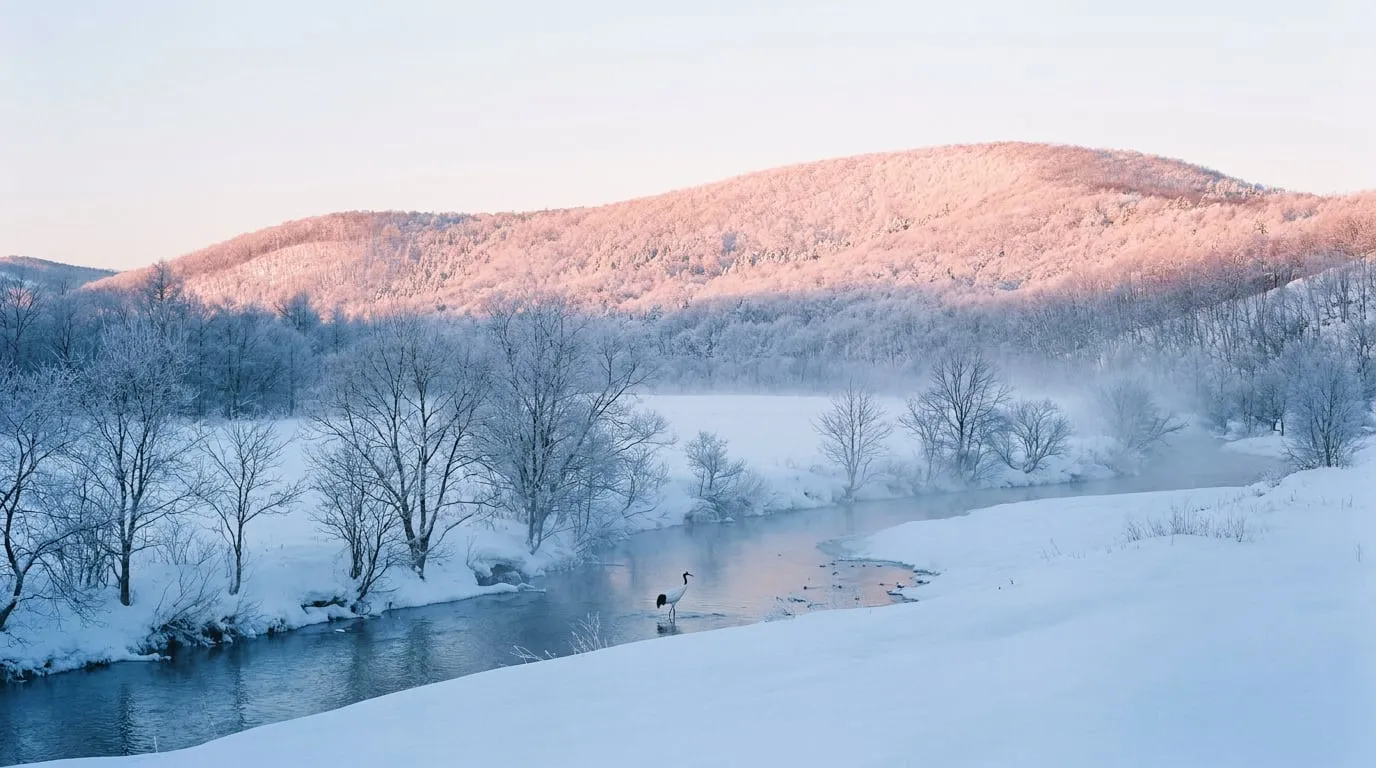
Stand in front of a Japanese sake shelf and read only the names, and the same characters keep coming back, such as mountain, crane, spring and Masamune. The characters carry the scenery around the brewery, old province names and wishes for good fortune. We counted how often each one is used in KIKI's data. The method is at the end.
Sake names are mostly written in kanji, the Chinese-derived characters that each carry a meaning, so a name often reads like a tiny poem or a place.
山, "mountain", comes first
Each kanji is counted once per brand name, however often it appears in that name.
| Rank | Kanji | Meaning | Brand names |
|---|---|---|---|
| 1 | 山 | mountain | 114 |
| 2 | 酒 | sake | 75 |
| 3 | 乃 | "of" (a linking sound) | 73 |
| 4 | 天 | heaven, sky | 61 |
| 5 | 越 | Koshi, an old name for the Niigata and Hokuriku area | 59 |
| 6 | 一 | one, first | 58 |
| 7 | 鶴, 白, 川 | crane, white, river | 57 each |
| 10 | 宗 | the second half of Masamune | 55 |
| 11 | 泉 | spring (of water) | 54 |
| 12 | 大 | big | 52 |
| 13 | 田 | rice field | 51 |
| 14 | 花 | flower | 49 |
| 15 | 正, 雪 | correct, snow | 48 each |
Mountain is far ahead of second-placed "sake". 乃 is mostly a linking "no", as in Yoshinogawa (吉乃川), Sawanoi (澤乃井) or Umenoyado (梅乃宿). Counting the hiragana の as well, 267 names carry that "no" sound.
How names end
Counting only the last character changes the picture a little.
| Last character | Meaning | Brand names |
|---|---|---|
| 山 | mountain | 68 |
| 鶴 | crane | 50 |
| 宗 | (Masamune) | 47 |
| 泉 | spring | 46 |
| 川 | river | 43 |
| 酒 | sake | 38 |
| 桜 | cherry blossom | 30 |
| 井 | well | 28 |
| 梅 | plum | 27 |
Crane appears in 57 names and is the last character in 50 of them. It almost never sits in the middle. The pattern is "something-crane". Counting the last two characters, Masamune (正宗) leads by far, with 45 names.
Why there are 45 Masamune
The first Masamune is credited to Sakuramasamune, a brewery in Nada, Hyogo. According to its history page, the sixth head of the Yamamura family wanted a new name, because the old one, Shinsui, did not suit the drinkers he sold to. Visiting a friend, the head priest of Zuikoji temple in Fukakusa near Kyoto, he saw a sutra scroll titled 臨済正宗. Read the Chinese way, 正宗 is "seishu", which sounds like 清酒 (seishu), the formal word for sake. He took it as his brand name.
The name became popular, and other brewers started calling their sake Masamune too. When the family applied to register it as a trademark in 1884, it had already become a byword for sake, and the government treated it as a common noun. The application was refused. On the government's advice, the family added a single crimson double cherry blossom and registered Sakuramasamune ("cherry Masamune") instead. Masamune stayed free for anyone, and KIKI lists 45 of them today.
Some are unusual: Gakki Masamune ("musical instrument", Fukushima), Shinshu Neko Masamune ("cat", Nagano), Hato Masamune ("pigeon", Aomori), Daruma Masamune (Gifu) and Ayu Masamune ("sweetfish", Niigata). Well-known names belong to the family too, such as Kiku-Masamune, also from Nada.
越 and 雪 belong to Niigata
Some characters show where they come from. Of the 59 names with 越, 49 come from breweries in Niigata, which was the old province of Echigo (越後). Names like Koshino-something (越乃) carry the old place name. Fukui, the old Echizen (越前), follows with four.
雪, snow, is in 48 names. Niigata again leads with 13, and Yamagata, Hokkaido and Fukushima have three each. These are places where sake is brewed through snowy winters.
Mountain, on the other hand, is everywhere: Niigata and Yamagata have 11 each and Gifu 8, and the rest are spread across the country. Names borrow a famous peak, the hill behind the brewery, or old names such as Otokoyama ("man mountain"), which ends nine brand names on its own.
Old province names
Besides 越, other old province names live on in sake names. Hida is in 11, Shinshu or Shinano and Aizu in 10 each, Kaga in seven, Banshu or Harima and Dewa in five each, Tosa and Noto in four each. A common pattern is the province plus one more word, as in Tosatsuru (土佐鶴, "Tosa crane"), Dewazakura (出羽桜, "Dewa cherry"), Aizu Homare and Kaganoi.
Among mountains, Fuji (富士) is in ten names. Not all are near Mount Fuji: some, like Izumo Fuji, borrow the name for a local peak.
Crane, dragon and tortoise
205 names contain an animal. Crane leads again with 57, followed by dragon (龍, 35 with the simpler 竜) and tortoise (亀, 28).
| Kanji | Animal | Brand names | Examples |
|---|---|---|---|
| 鶴 | crane | 57 | almost always "something-crane" |
| 龍, 竜 | dragon | 35 | Kuzuryu (九頭龍), Shoryu no Mai (昇龍乃舞) |
| 亀 | tortoise | 28 | Kameizumi (亀泉), Kamenoi (亀の井) |
| 鷹 | hawk | 17 | Hakutaka (白鷹), Zuiyo (瑞鷹) |
| 鹿, 虎 | deer, tiger | 11 each | |
| 鳳 | phoenix | 10 | |
| 馬 | horse | 9 |
Birds and imaginary creatures, the dragon and the phoenix, stand out. Cat, bear and sweetfish appear in three names each.
More spring and autumn than summer and winter
Counting the seasons, 春 (spring) is in 16 names and 秋 (autumn) in 13, but 夏 (summer) in only four and 冬 (winter) in three. Among other seasonal characters, flower (花) and cherry blossom (桜, 櫻) are in 49 names each, snow in 48, plum in 38, moon in 30 and wind in 25.
The average name is 3.4 characters long, and 62 names are a single character, such as 凛 (dignified) or 夢 (dream).
Water and good fortune
Sake depends on its brewing water. A water character (泉 spring, 川 river, 井 well, 水 water, 滝 waterfall, 沢 stream, 清 clear, 流 flow or 湧 welling up) appears in 225 names, about 9% of all.
The other big group is characters of good fortune: 鶴 crane, 亀 tortoise, 松 pine, 寿 long life, 福 luck, 千 thousand, 万 ten thousand, 宝 treasure, 喜 joy and 祝 celebration. One of them is in 259 names. These characters suit a drink made for celebrations.
Some names describe people, like 美人 ("beauty") in 13 names and 小町, a byword for a beautiful woman after the poet Ono no Komachi, in eight. Eight names end in 寒梅, the plum that flowers in the cold.
How we counted
- Brands in KIKI's catalogue whose bottles are mostly sake (shochu and awamori brands left out). Identical names count once: 2,478 names.
- A kanji is counted once per name, however often it appears in that name.
- Prefectures are where the brewery is. KIKI lists different numbers of breweries per prefecture, so comparisons between prefectures hold within KIKI's data only.
- Data as of 5 November 2026. More in how our numbers work.
If a name catches your eye, point KIKI at the label to see how that sake tastes and how people rate it. Drinking is for adults only (20 and over in Japan).