
Kame no O: the sake rice that nearly vanished, and how it came back
Kame no O is a rice found in 1893 as three ears in a cold-damaged Yamagata field by the farmer Abe Kameji, and revived as a sake rice by breweries in the 1980s.
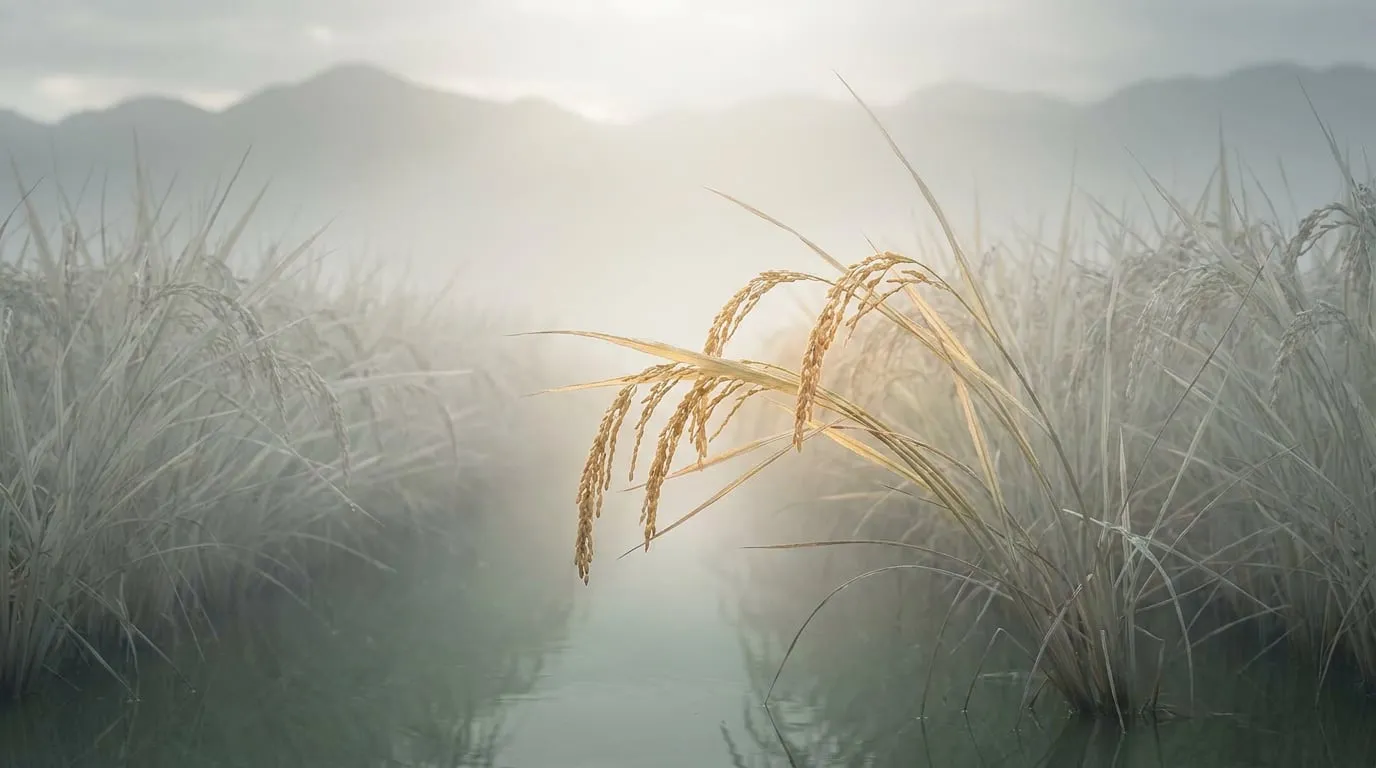
It is 1893, a cold, wet year in northern Japan. A 26-year-old farmer named Abe Kameji is walking to Kumagai Shrine in the village of Tateyazawa, in what is now the town of Shonai in Yamagata Prefecture. Beside the path, in the water inlet of a paddy, he sees three rice ears that ripened properly while most of the rice around them was damaged by the cold.
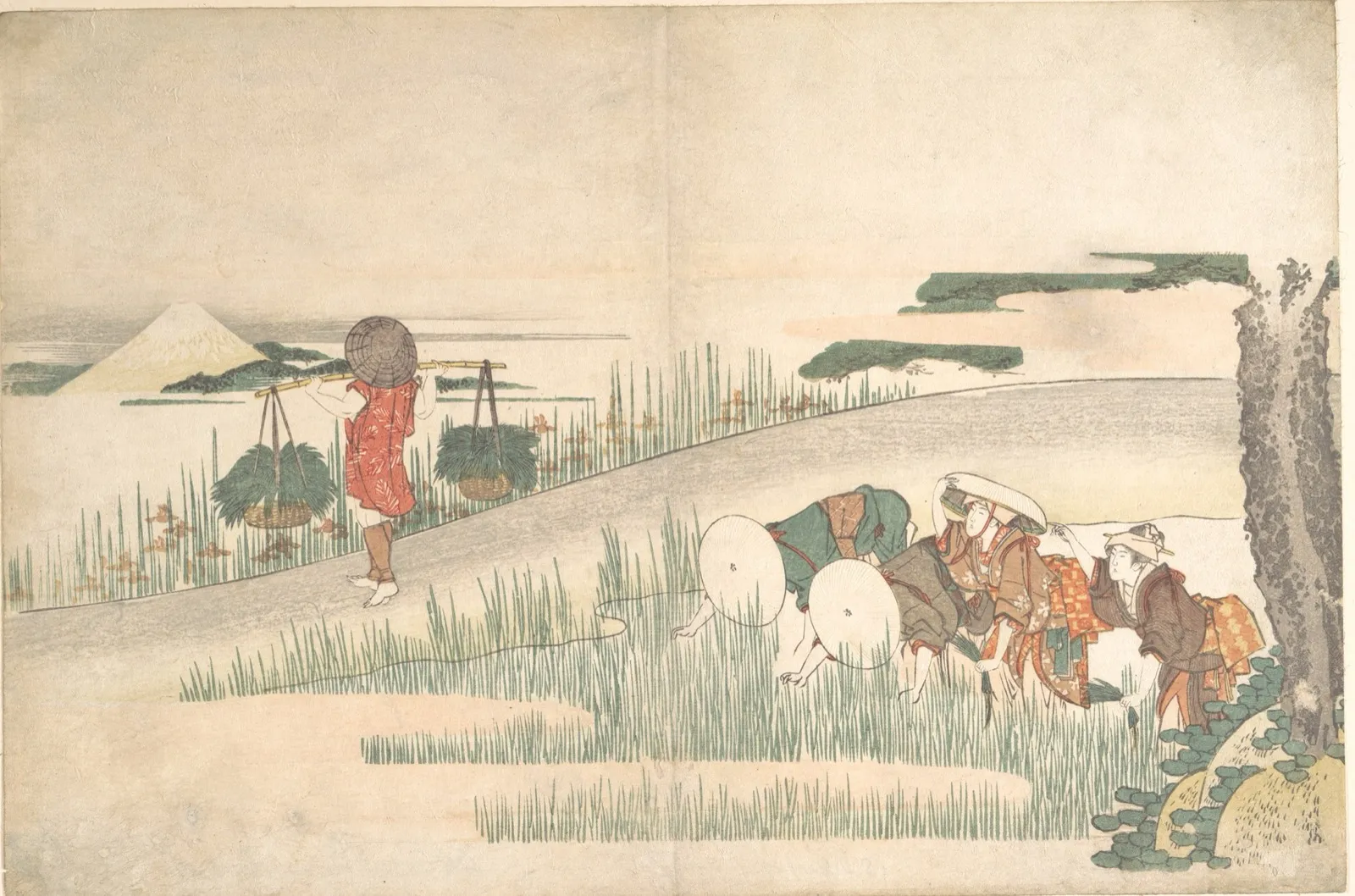
The farmer Abe Kameji
Abe Kameji was born in 1868 in Koide Shinden, a farming hamlet in today's Shonai, the eldest son of a farming family. He left school at 12 and taught himself farming, with an older local farmer as his mentor. He also pushed for "dry paddies" (fields that can be drained and dried), which were still uncommon and drew opposition from neighbours.
A new variety from three ears
Kameji asked the field's owner for the ears and grew their seed. According to a Shonai town source, about four years of selection followed, and the new variety was complete in 1897. Japanese Wikipedia gives a different path: two disappointing years, then a single plant that did well in a cold-water inlet in 1896, which he multiplied. So the time from "three ears" to "finished variety" varies by source.
The name is said to come from one character of Kameji's own name, suggested by a friend. One local account says "Kame no Ō" (亀ノ王, "king") was proposed and Kameji declined it as too grand, settling on "O" (尾, "tail"). Another source credits a friend named Ota Yorikichi with the naming.
The rice stood up well to wind and pests, went from heading to ripening quickly, and gave steady harvests with little fertiliser. Sources add that Kameji shared seed without charging for it.
One of Japan's three major rice varieties
Kame no O spread across northern Japan, and to Korea and Taiwan. Around 1925 it was planted on roughly 190,000 hectares. A local newspaper feature gives 194,114 ha and a town tourism page gives 195,000 chōbu (a Japanese unit close to a hectare), so the exact figure wobbles, but all agree it ranked with two other varieties, Shinriki and Aikoku, as one of the country's leading rices. It was valued as table rice, sushi rice and sake rice.
Kameji received an agricultural society's merit prize in 1921 and a Medal with Blue Ribbon in 1927. He died in 1928, aged 61.
The ancestor of Koshihikari
Kame no O is also a parent of other varieties. Public researchers selected a pure line from it called Kame no O No. 4. Crossed with Rikuu 20, it gave Rikuu 132. Rikuu 132 crossed with Morita-wase gave Norin 1, and Norin 1 crossed with Norin 22 gave Koshihikari, today Japan's best-known table rice. Rikuu 132 is Koshihikari's grandfather, according to a national invention society.
Some sources say Koshihikari and Sasanishiki inherited Kame no O's good eating quality, but this is usually phrased as "believed", and only the family line above is documented.
How it disappeared
Kame no O did not suit the age of chemical fertiliser. It is tall and weak against disease, so with heavy fertilising it falls over. Local sources say that after 1918, as inorganic fertilisers spread, other varieties took its place. Under the postwar food control system, which favoured high-yield rice, it was pushed aside further. Commercial farming ended around the middle of the Showa era, and by the 1970s nobody grew it. The timing differs a little between sources. It became a "phantom rice".
The 1980s, when breweries went looking
The revival started with a brewer's memory.
Kusumi Shuzo, Niigata. According to the brewery's own website, the sixth-generation owner, Kusumi Norimichi, heard an elder Echigo tōji (a master brewer) say that no sake beat one made from Kame no O. In November 1980 the brewery got hold of only about 1,500 grains of seed. Where the seed came from is not stated on the brewery's site. Japanese Wikipedia says it came from Niigata's agricultural experiment station.
The brewery's own staff, who are also local farmers, grew the grains. The next spring 963 seedlings came up, and in autumn they harvested 30 kg. In autumn 1982 the harvest was 4,800 kg. In winter 1983 the brewery made a junmai daiginjo (a premium sake made only from rice, koji and water, with the rice polished to 50% or less) called Kame no Okina (亀の翁). A Niigata sake association interview says it won a gold medal at the year's three major competitions.
Koikawa Shuzo, Yamagata. At about the same time, the rice's home town was working on it too. Koikawa Shuzo, a brewery in Shonai founded in 1725, says on its website that it received seed in 1980, began growing it, and made its first Kame no O sake in 1981.
Sources differ on the timeline here. Japanese Wikipedia says the brewery's owner decided in 1979 to revive it, used seed from a great-grandchild of Abe Kameji, and finished a sake in 1983. A different article says trial farming began in 1981 and took four years before a batch could be made from Kame no O alone. The published sources do not settle which is right.
Nor is there a clear answer to "who came first". What is certain is that around 1980 two breweries, one in Echigo (Niigata) and one in Shonai (Yamagata), sought out this rice, grew it and brewed it at nearly the same time.
The manga that spread the story
The manga Natsuko no Sake ("Natsuko's Sake", by Oze Akira, in Kodansha's Morning, 1988 to 1991) tells of reviving a lost sake rice. According to Kusumi Shuzo, its story of rice-growing and brewing was the model. In the manga the rice has an invented name, Tatsunishiki. A TV drama followed in 1994.
By the calendar, the sake Kame no O came in 1983 and the manga began in 1988. Local Shonai sources call the manga a turning point for the revival, but the breweries' work had started earlier. The manga is better read as what told the whole country about the revival.
Kame no O today
A "Kame no O Summit" was held from 1997 in the former town of Amarume (now part of Shonai) and ended with its tenth meeting in Sendai in 2006. Local sources say two breweries in Shonai use the rice.
Japanese Wikipedia says its grains are fairly large, suited to ginjo-style sake where more than half of the grain is polished away, and that it has "unknown" sides that make brewers curious. It says more than 100 brands used it as of 2008.
In KIKI's catalogue today, as of 5 November 2026, 90 sakes from 49 breweries in 23 prefectures list Kame no O as their rice. For the 53 with a current price, the median is ¥2,090 per 720 ml (see how our numbers work).
| Prefecture | Bottles |
|---|---|
| Niigata | 18 |
| Yamagata | 16 |
| Ibaraki | 13 |
| Akita | 7 |
| Fukushima | 6 |
| 18 other prefectures | 30 |
Niigata and Yamagata, the homes of the two breweries that revived it, still lead. Koikawa Shuzo makes Koikawa Junmai Daiginjo Kame no O, and also sakes named after the farmer himself: "Abe Kameji" and "Kameji Kojitsu".
In front of the shelf
If you see Kame no O on a label's rice line, think of three ears in 1893 and about 1,500 grains in 1980. Taste varies with the brewery and the method, so "Kame no O" alone does not say how a bottle will taste.
The rice's home region is described on our Yamagata page. The KIKI app can show a bottle's rice when you point it at the label.
Drinking is for adults only (20 and over in Japan). Enjoy it slowly and in moderation.
Sources
- Wagou no Sato Association, "Abe Kameji and Kame no O" (in Japanese)
- Wagou no Sato Association, "The phantom rice, Kame no O" (in Japanese)
- Wagou no Sato Association, "Kumagai Shrine, birthplace of Kame no O" (in Japanese)
- Navi Shonai-machi, "Abe Kameji" (in Japanese)
- Shonai Nippo, "Local pioneers 48: Abe Kameji" (in Japanese)
- Kusumi Shuzo, "Kame no O revived" (brewery website, in Japanese)
- Niigata Sake Brewers Association, "Kusumi Shuzo" (in Japanese)
- Koikawa Shuzo, "About Koikawa" (brewery website, in Japanese)
- Sake World, "Koikawa Shuzo" (in Japanese)
- Japan Institute of Invention and Innovation, "Koshihikari" (in Japanese)
- Tanoshii Osake, "Natsuko's Sake, a landmark sake manga" (in Japanese)
- Japanese Wikipedia, "Kame no O"